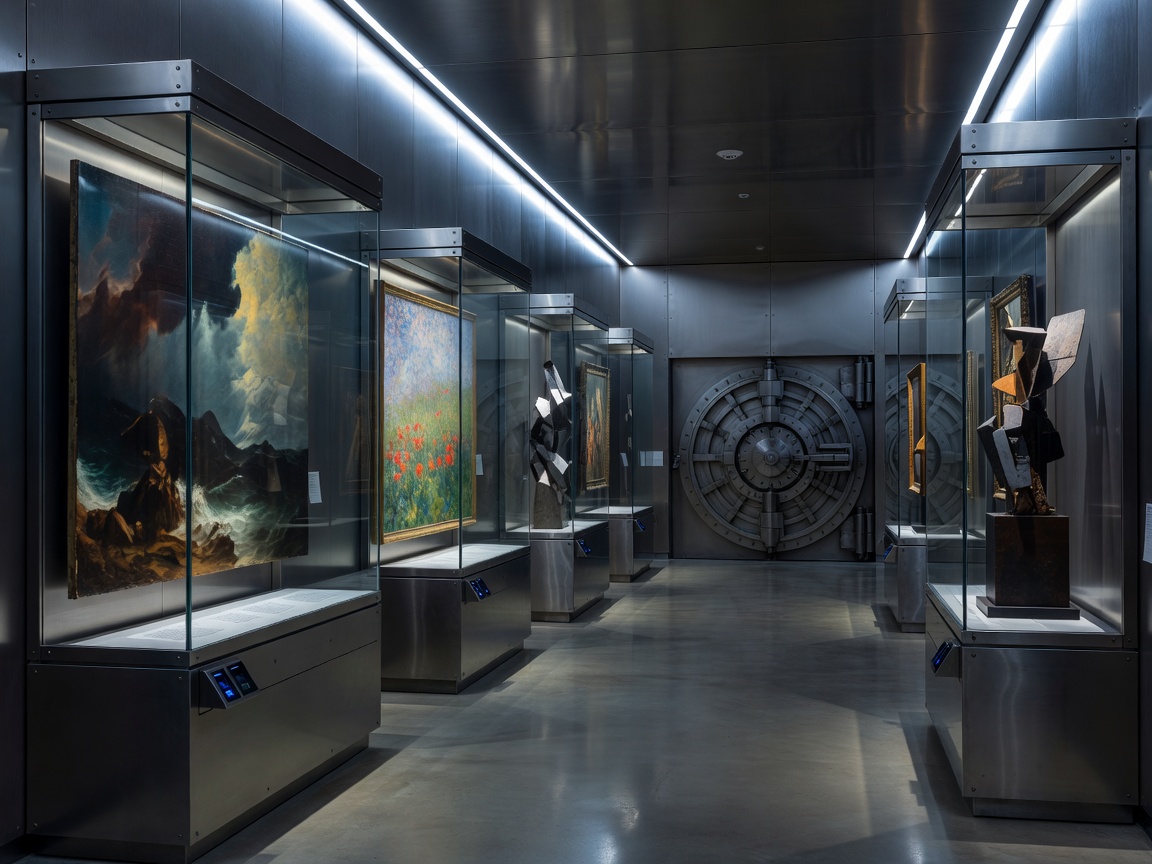
Situated near the runway of Geneva International Airport lies an unassuming industrial complex holding what experts estimate to be over $100 billion in blue-chip artwork, rare Roman antiquities, impressionist canvases, and vintage fine wines: the Geneva Freeport (Le Free Port de Genève).
The Fiscal Framework of Duty-Free Freeport Storage
Freeports function as extraterritorial customs zones. When a high-net-worth collector or family office acquires a $50M Jean-Michel Basquiat or Claude Monet painting at auction in London or New York, shipping it directly to Geneva Freeport defers import tariffs, local value-added tax (VAT), and sales taxes indefinitely—so long as the work remains physically stored within the facility.
"The Geneva Freeport is the greatest museum the public will never see—holding more priceless masterpieces than the Louvre and MoMA combined."
Museum-Grade Environmental & Biometric Controls
Storing masterpieces worth tens of millions of dollars per square meter requires environmental stability of the highest precision:
- Climate Stabilization: Atmospheric controls maintain a constant 20°C (68°F) temperature and 50% relative humidity, eliminating thermal expansion or canvas degradation.
- Fire Suppression without Liquids: Specialized gaseous fire suppression systems (such as Novec 1230) extract oxygen instantly in case of thermal detection without deploying water or foam that could destroy canvas pigments.
- Dual-Custody Vault Access: Vault doors require dual-key biometric validation combining iris scans, high-frequency RFID badges, and physical keycard authorization.
Off-Market Private Transactions Behind Closed Vaults
Because artwork can be inspected inside private viewing suites within the Freeport, multi-million dollar transactions regularly occur on-site. Ownership titles are transferred between offshore entities without the painting ever leaving the climate-controlled security perimeter, enabling instant liquidity without physical transit risk.